Dishes
Braised snack platter (lu wei)
滷味
Also called: lu wei · lou mei · 滷味拼盤
Tofu, eggs, offal and other bits simmered in a spiced soy master stock, sliced and served as a platter.
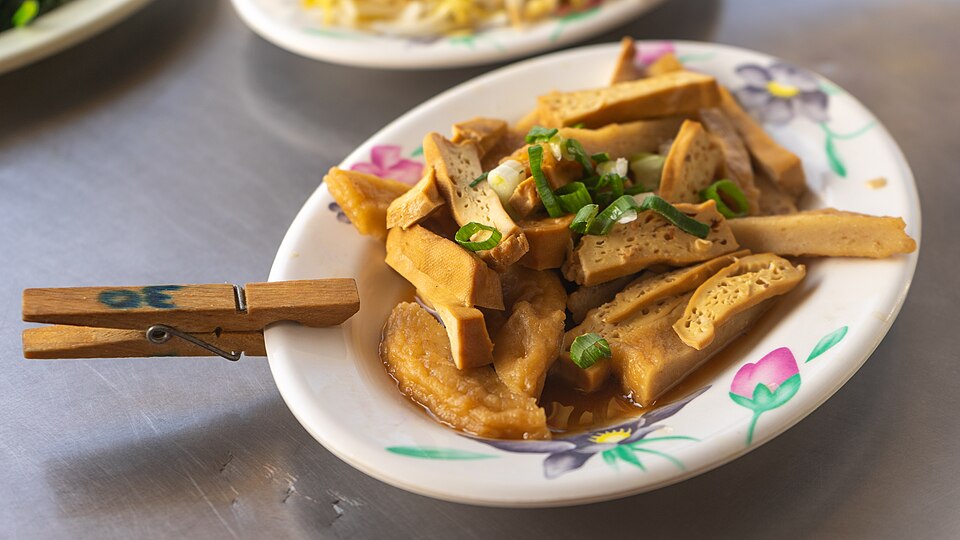 Photo: Riblet15, CC BY-SA 4.0
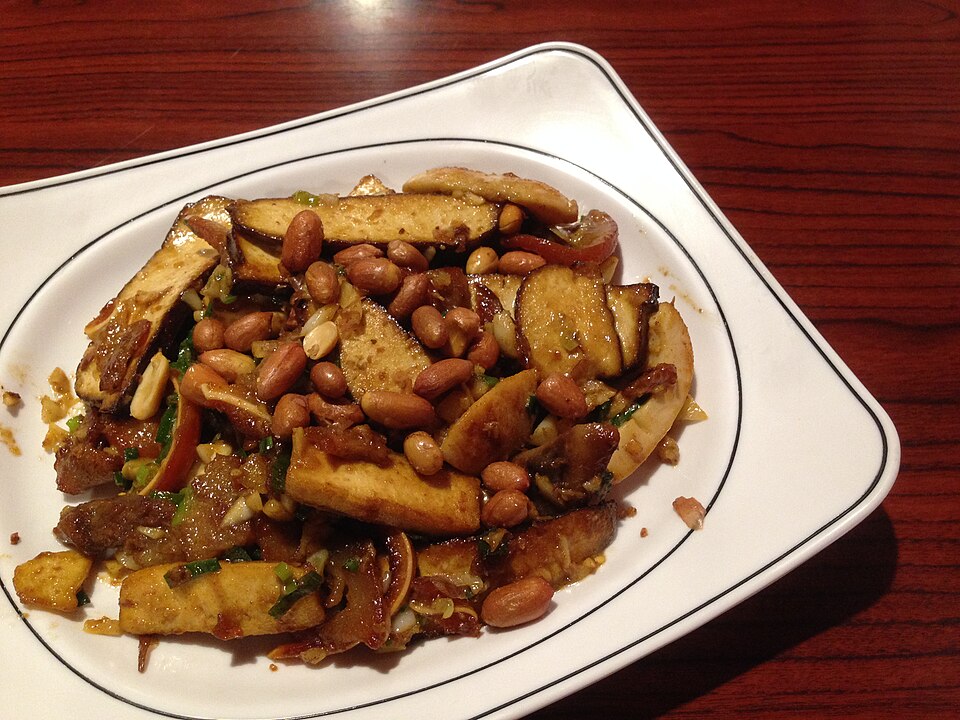 Photo: bryan... from Taipei, Taiwan, CC BY-SA 2.0
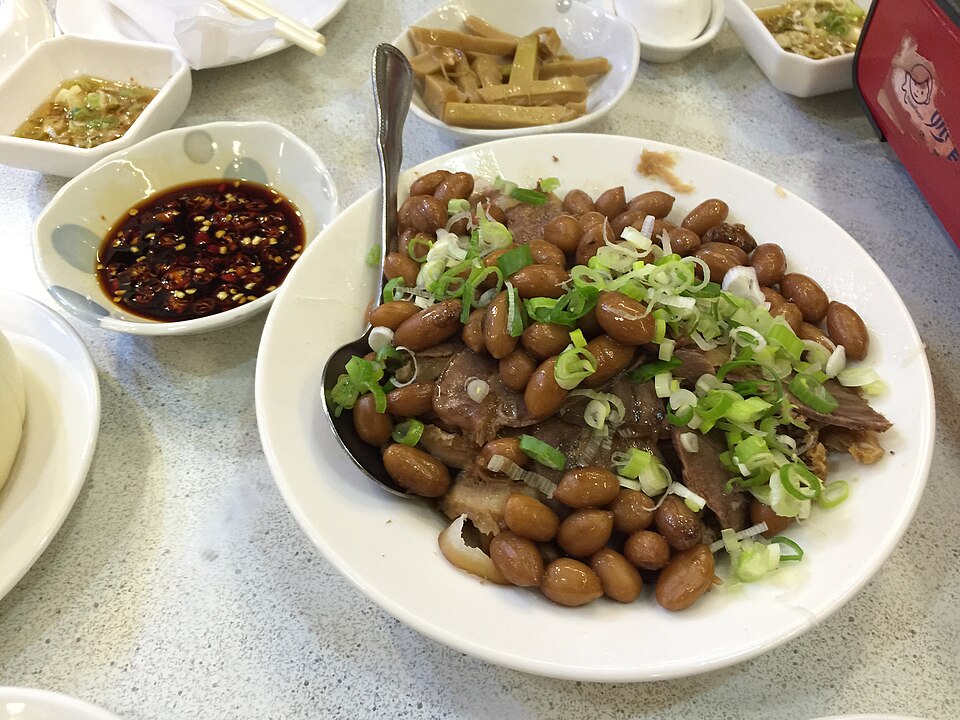 Photo: bryan... from Taipei, Taiwan, CC BY-SA 2.0
What it is
Lu wei is food braised in a seasoned soy-based stock, sold from stalls and shops in most Taiwanese towns. Common Taiwanese items are dried tofu, layered tofu, pig's blood cake and kelp, along with eggs and pork cuts. Each shop treats its stock recipe as a secret.
Where it comes from
Braised foods have a long history in Chinese cooking. In Taiwan, post-war migrants added a military-village (juancun) style built around braised beef shank and tripe.
How it is made
The stock is built on soy sauce, spring onion, ginger, rice wine and rock sugar, with spices such as star anise, liquorice and Sichuan pepper. Market vendors traditionally braise the items, let them cool, then slice them and pour hot stock over. At many stalls you pick items yourself and they are reheated in the stock.
How to eat it
At a noodle shop, a mixed plate makes the side. At a lu wei stall, pick your own items.
In Kaohsiung
At Hamasen Lu's Shantou Noodles in Kaohsiung, the big platter has baby squid, fish and pork sausage and thin-sliced pork cheek. Mirror Media reports the braising stock uses up to 12 Chinese herbs and is steeped with sorghum liquor and rice wine for four months. It comes with a ginger and soy dip.
Where to eat it in Kaohsiung
Sources