Dishes
Mochi
麻糬
Also called: moâ-chî · 麻糍 · mashu
Soft, chewy glutinous-rice cakes, often filled with peanut, sesame, bean paste or fruit.
What it is
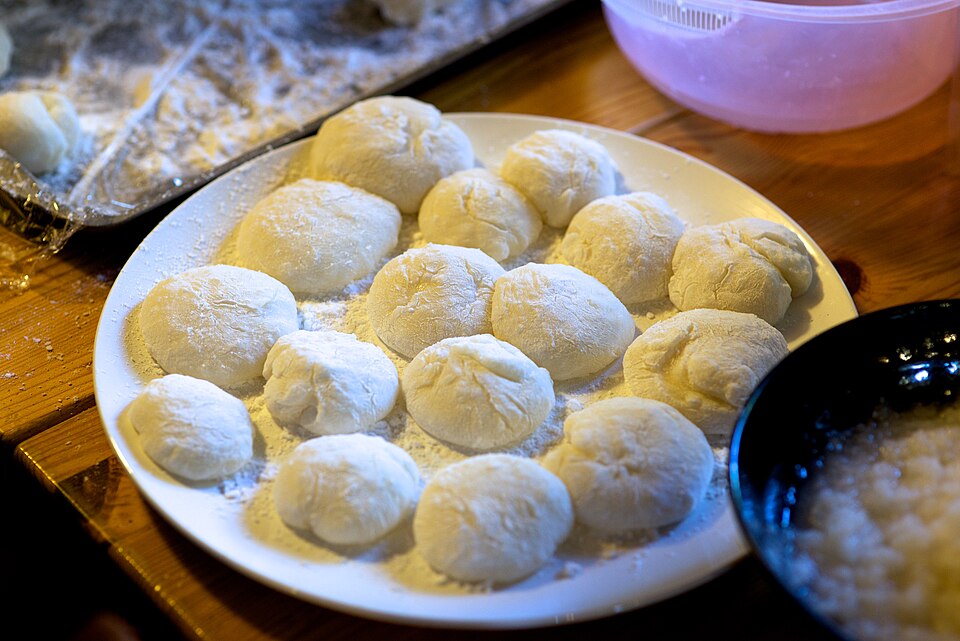
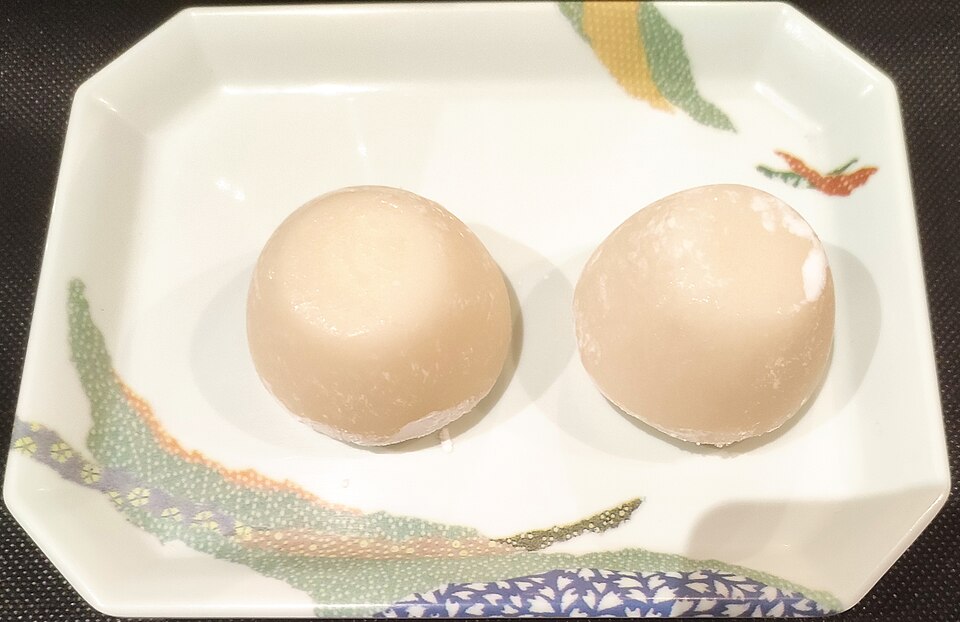
A soft rice cake much like Japanese daifuku, usually wrapped around a sweet filling such as bean paste, peanut or sesame. The outside is smooth and stretchy and the filling sits in the centre. Fruit fillings such as strawberry and mango also turn up.
Where it comes from
Both Hakka and Hoklo households in Taiwan traditionally made pounded glutinous-rice cakes. The Hakka version is served as plain rice dough rolled in peanut or sesame powder, while the soft filled kind is called moâ-chî (麻糍) in Taiwanese Hokkien and mashu (麻糬) in Mandarin.
How it is made
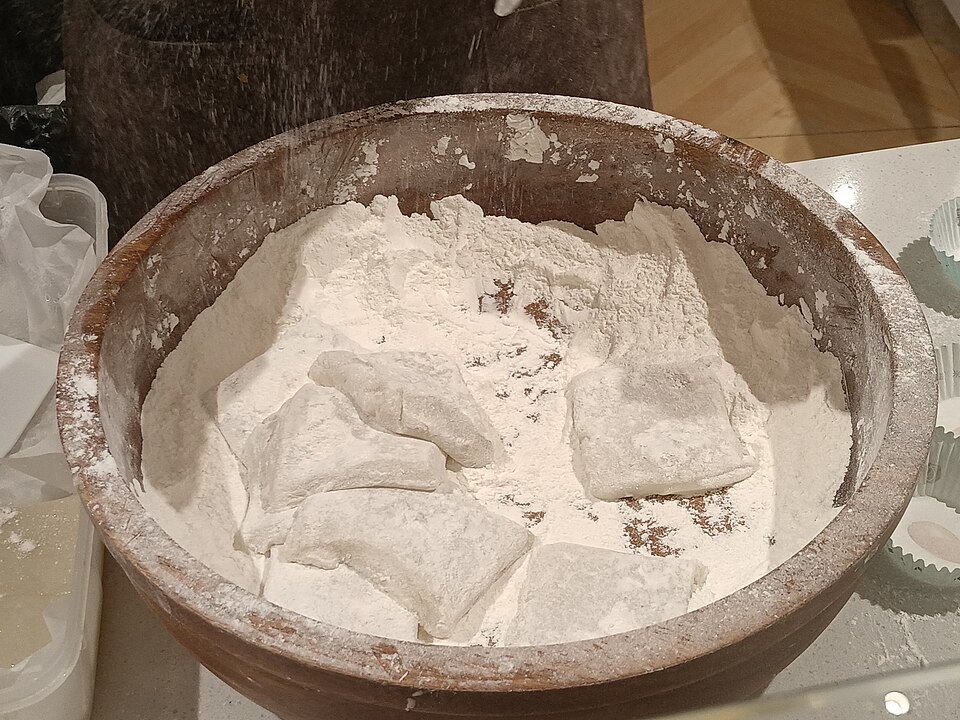
Traditionally, glutinous rice is soaked overnight, steamed and pounded in a mortar with wooden mallets until smooth, then shaped. A more modern method cooks glutinous-rice flour and water into a sticky dough. At A-Mian in Kaohsiung the owner starts from a rice-milk base that can take up to eight hours and wraps each piece by hand.
How to eat it
Eat mochi the day you buy it. Fresh, natural fillings do not keep well in summer heat.
In Kaohsiung
A-Mian, a small Yancheng stand, uses named local produce: Beigang peanuts, Dajia taro, Wandan red beans, Miaoli strawberries and mangoes from Fangshan and Yujing. The owner says she started it from memories of her grandmother's white Mid-Autumn mochi.
Where to eat it in Kaohsiung
Sources