Dishes
Shantou noodles
汕頭麵
Also called: 汕頭乾麵
Dry noodles tossed in lard, fried shallots and garlic, brought to Kaohsiung's Hamasen by migrants from Shantou.
What it is
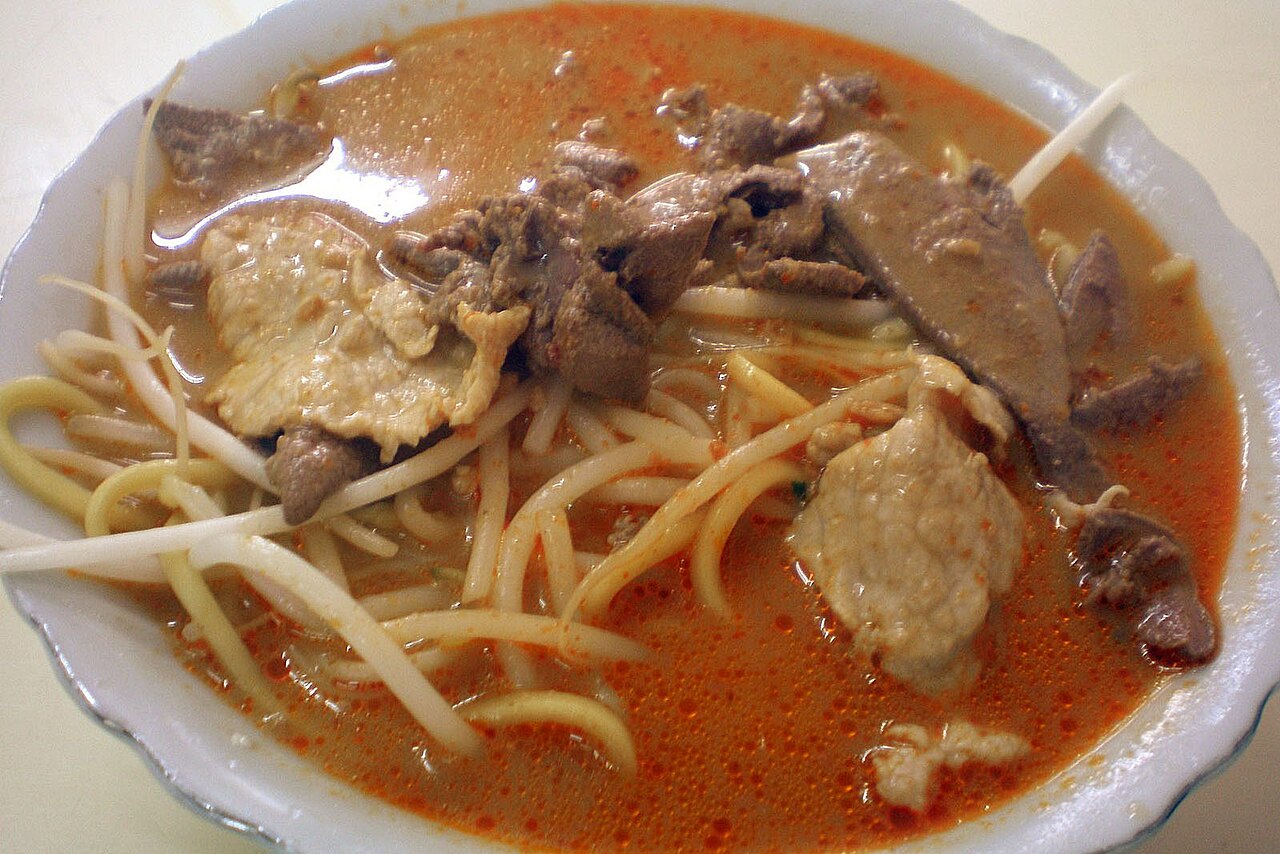
Thin or thick noodles served dry, tossed with lard, fried shallots, garlic paste and a herbal braising liquid, topped with bean sprouts and a few thin slices of pork. There is no minced meat sauce. The first thing you smell is lard and garlic.
Where it comes from
After the Second World War, Teochew migrants from the Shantou area settled in Hamasen, many working in the Chinese herbal medicine trade or loading cargo at the docks, and brought their home cooking with them. Lu's stall by the Daitian Temple was started by a Shantou native, Mr Wu, and the Lu family took it over about 30 years ago.
How it is made
Boiled noodles are tossed with lard, fried shallots and garlic paste plus the shop's braising liquid. At Lu's, the braise uses 12 Chinese herbs steeped in kaoliang and rice wine for four months.
How to eat it
Mix the noodles thoroughly before eating. Add side plates of braised tofu, egg, squid or liver, or the house fish-and-pork sausage.
In Kaohsiung
Lu's stall at the Daitian Temple food court in Hamasen has been running for more than 60 years.
Where to eat it in Kaohsiung
Sources