Dishes
Taiwanese oden
黑輪
Also called: o-lián · olen · 關東煮 · guandongzhu · hei lun
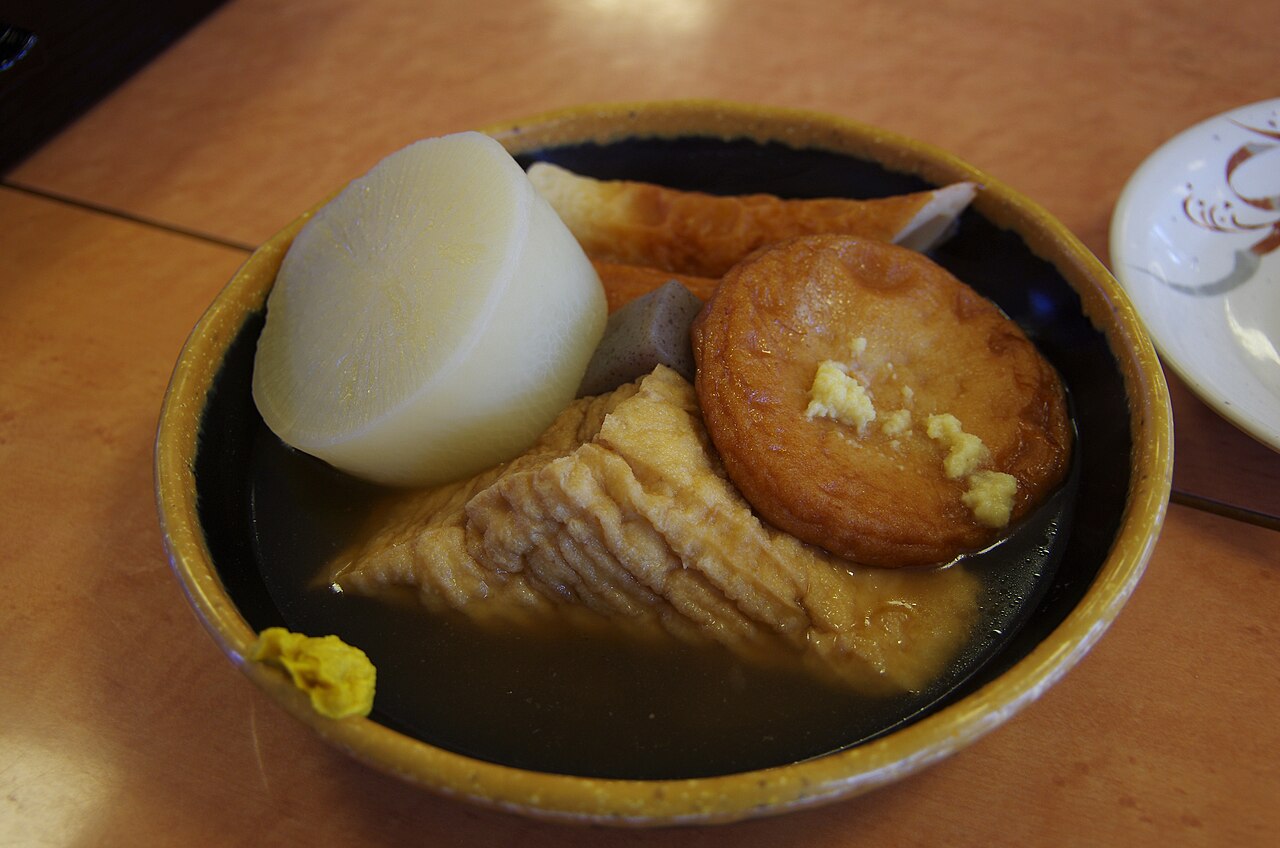
Fish cakes, tofu and other pieces simmered in a light broth, Taiwan's version of Japanese oden.
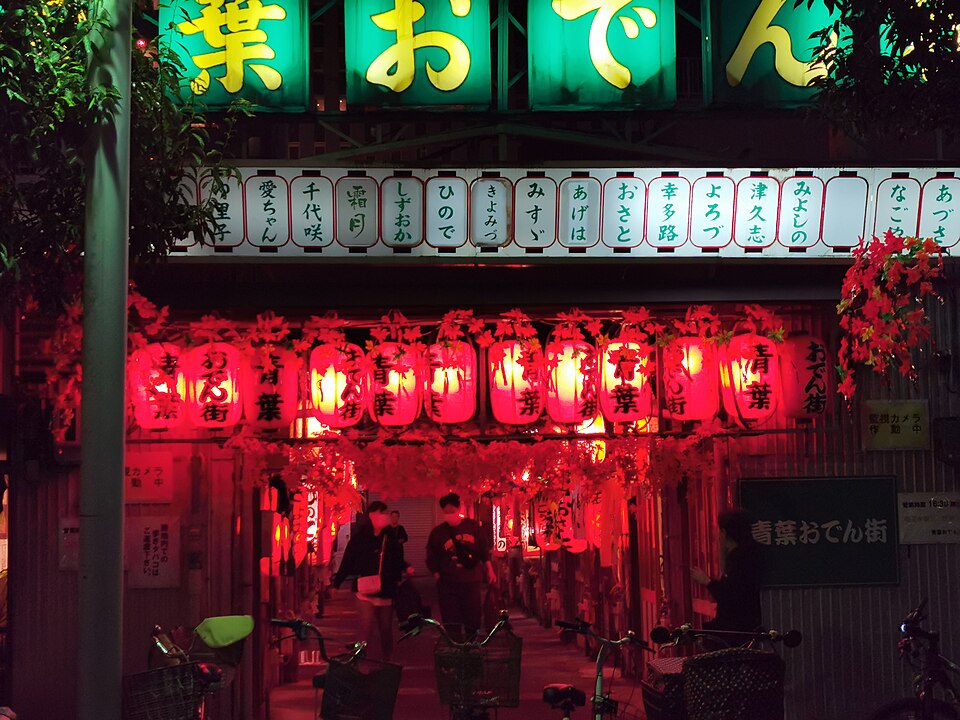
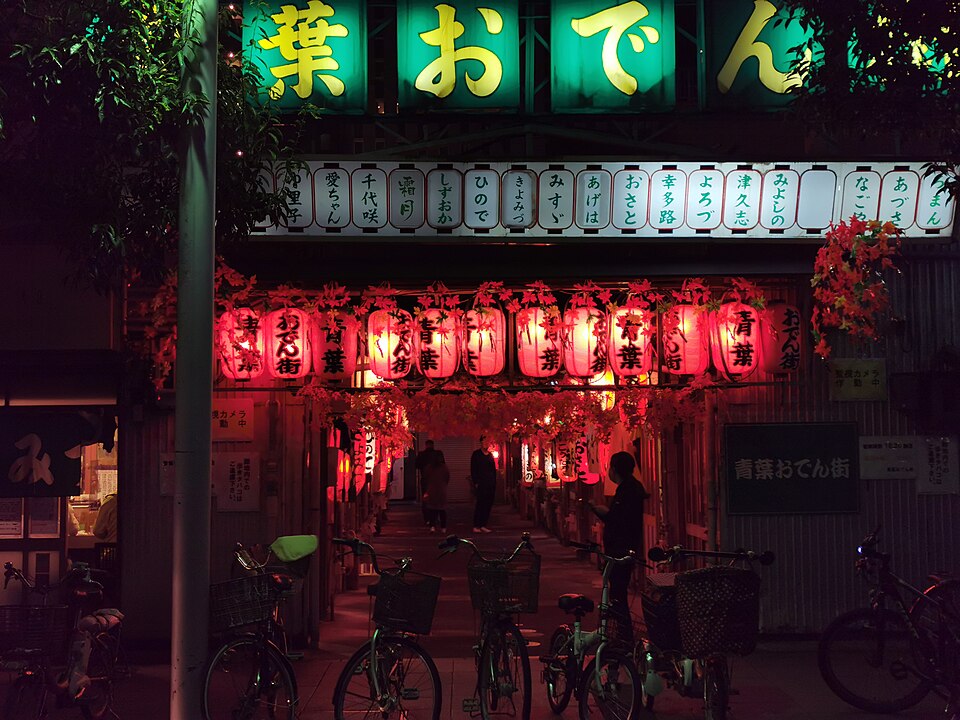
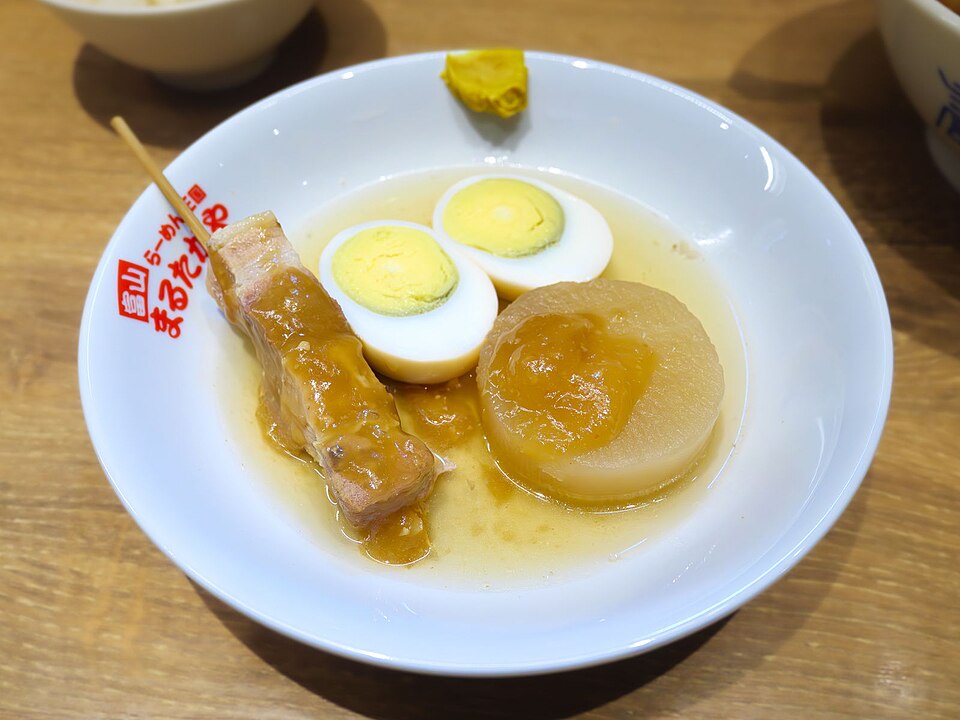
What it is
Fried fish cakes and surimi simmered in broth and served with a sweet sauce. Alongside the Japanese basics, Taiwanese oden adds local items such as pork meatballs and blood pudding. At Pao Ko in Tainan the broth tastes mainly of sweet radish.
Where it comes from
Oden came to Taiwan during Japanese rule. In Taiwanese Hokkien it became o-lián, later written in Mandarin as 黑輪 (hēilún). Convenience stores sell it under the Japanese-derived name guandongzhu (關東煮). The fried fish cake known as tianbula (甜不辣) is Japanese satsuma-age, which migrants from Kyushu called tempura.
How it is made
Fried fish cakes, surimi and other pieces are simmered in broth so they take on its flavour.
How to eat it
Pick the pieces you want and drink the broth alongside. At Pao Ko in Tainan you mark your own order sheet, and the broth comes free with the oden.
In Kaohsiung
Pao Ko, in a bamboo-walled room in a lane near Tainan's Confucius Temple, is as famous for its stir-fried noodles as its oden. They are made with Uni-President braised-pork instant noodles, an egg and side ingredients.
Where to eat it in Kaohsiung
 廖家黑輪
Liao Family Oden
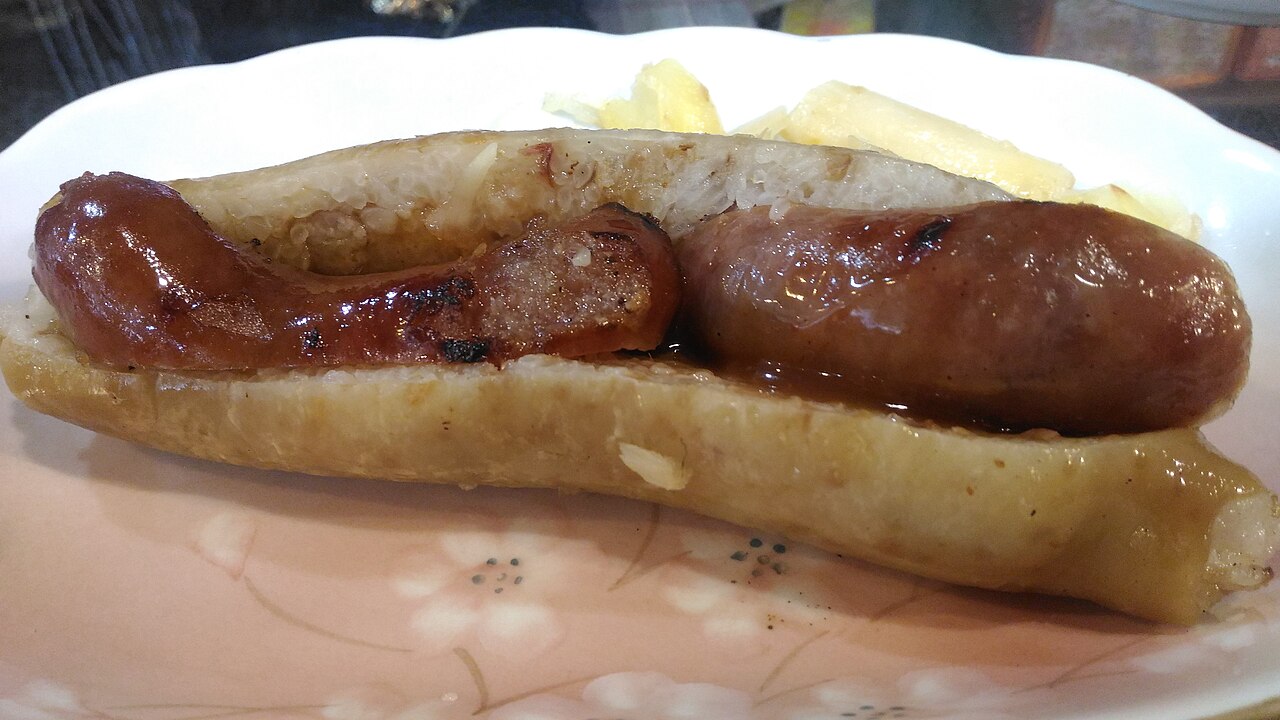
This Sanmin Street market stall has grilled fish cake over charcoal since 1963. Order a mixed set of grilled oden, sausage and rice sausage.
 三輪的店
San Lun De Dian (The Tricycle Shop)
Started in 1961 as a tricycle cart, this Fengshan lane shop serves charcoal-grilled sausage, sticky-rice sausage, oden and pork-bone soup, and was added to the MICHELIN Guide selection in 2024.
Sources