Dishes
Qie-zai noodles
切仔麵
Also called: 摵仔麵 · tshik-á-mī
Noodles shaken dry in a strainer and served in pork broth, eaten with plates of sliced meat and offal.
What it is
Egg noodles or rice noodles in a broth made from pork bones, often with chicken. Bean sprouts and leek go in, sliced pork goes on top, and a little lard and fried shallots finish the bowl. It can be served with or without soup.
Where it comes from
The original Taiwanese name, written 摵仔麵, refers to the bamboo or mesh strainer used to shake water off the noodles, which keeps them springy. Wikipedia says the dish is believed to come from Luzhou in New Taipei, was invented during Japanese rule and became popular after the Republic of China government moved to Taiwan.
How it is made
Noodles are cooked in a strainer basket, shaken dry and dropped into the broth. At Cheng's in Kaohsiung, pork heart, liver and tongue are blanched, then simmered for hours with a whole chicken. Bamboo shoots go in during summer and white radish in winter, with lard-fried shallots on top.
How to eat it
Pick noodles or rice noodles, then choose a few plates of sliced pork, fish or offal from the counter. At Cheng's, go mid-morning, once the broth is ready and the meat freshly cooked.
In Kaohsiung
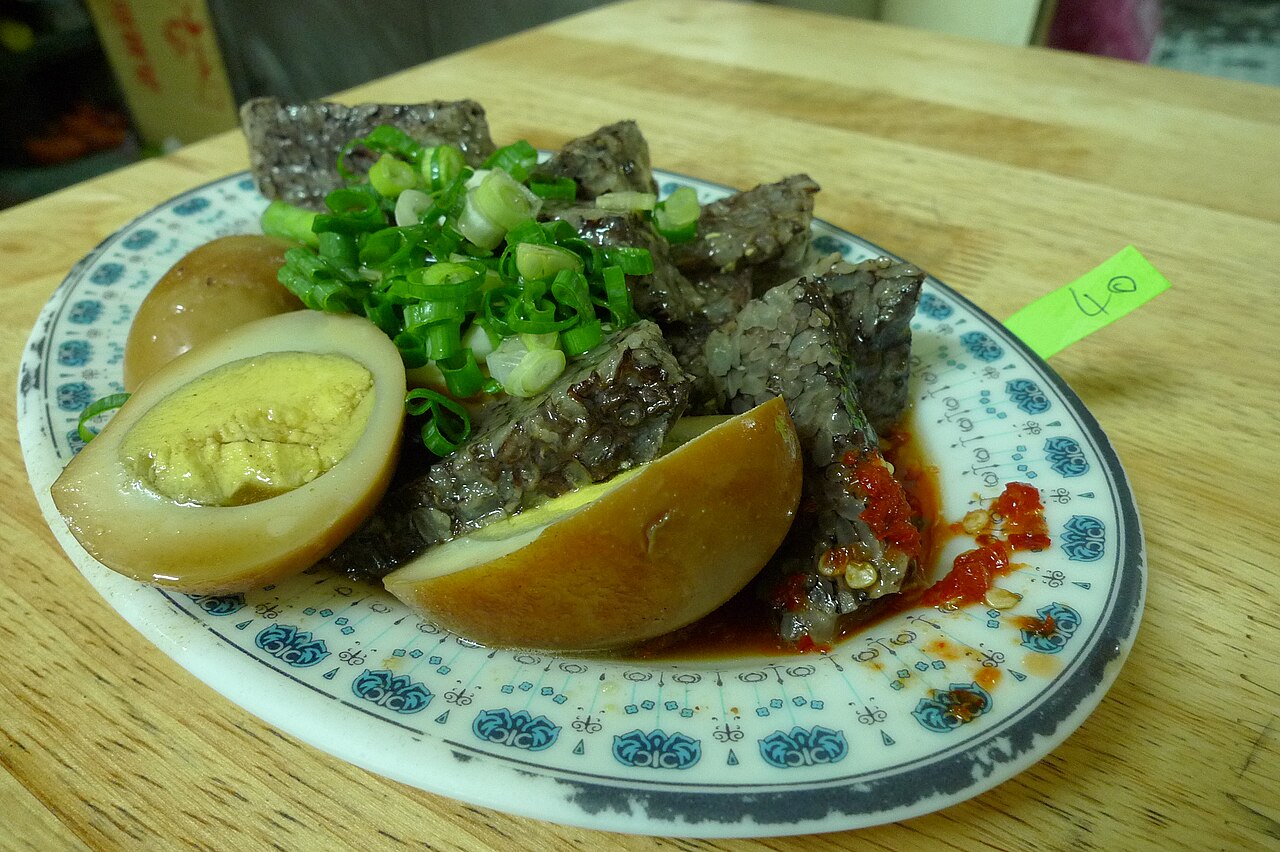
Side dishes at Cheng's come on vintage floral porcelain. The Yancheng shop is decades old and now run by the third generation.
Where to eat it in Kaohsiung
Sources