Dishes
Steamed taro cake
芋粿
Also called: 芋頭糕 · 芋香糕 · ōo-kué (Taiwanese Hokkien)
A dense steamed cake of taro and rice, often flavoured with shallots, shiitake or dried shrimp.
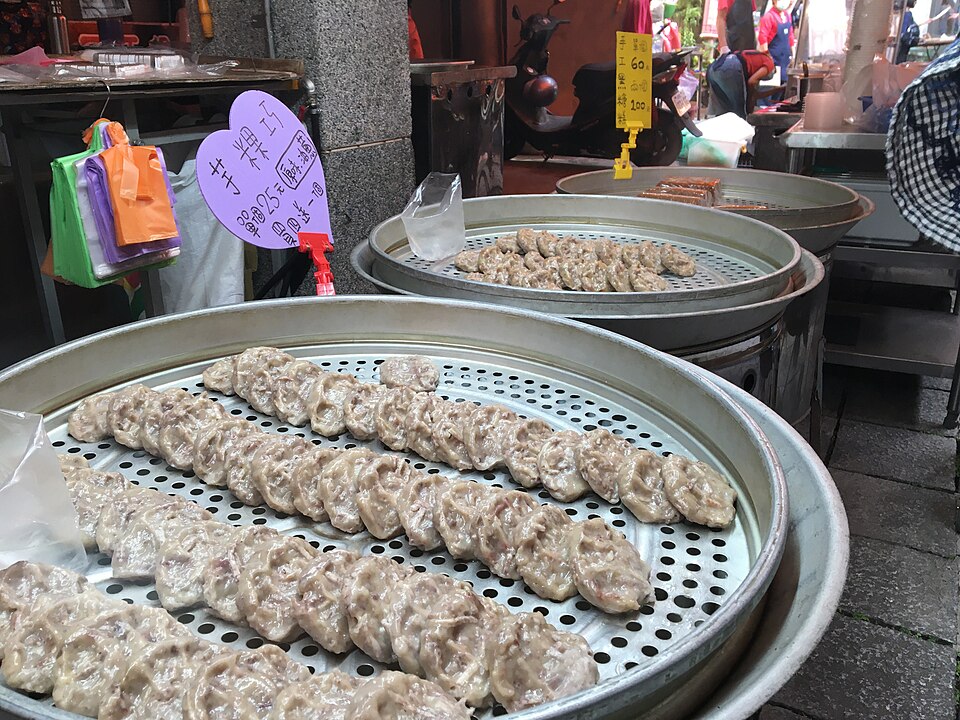 Photo: Sin-siōng, CC BY-SA 4.0
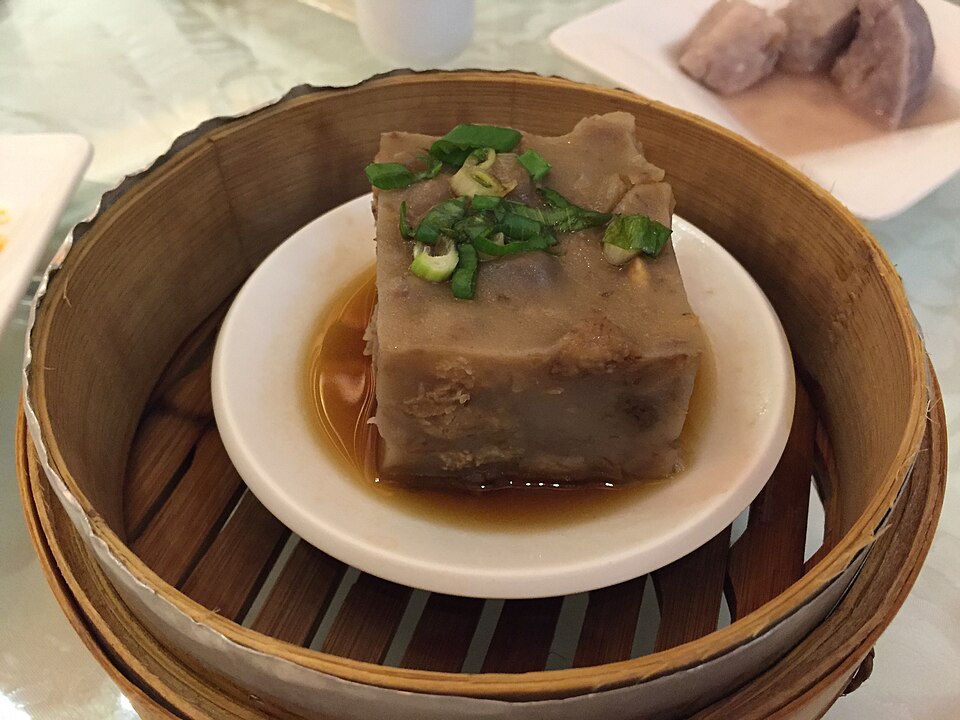 Photo: bryan... from Taipei, Taiwan, CC BY-SA 2.0
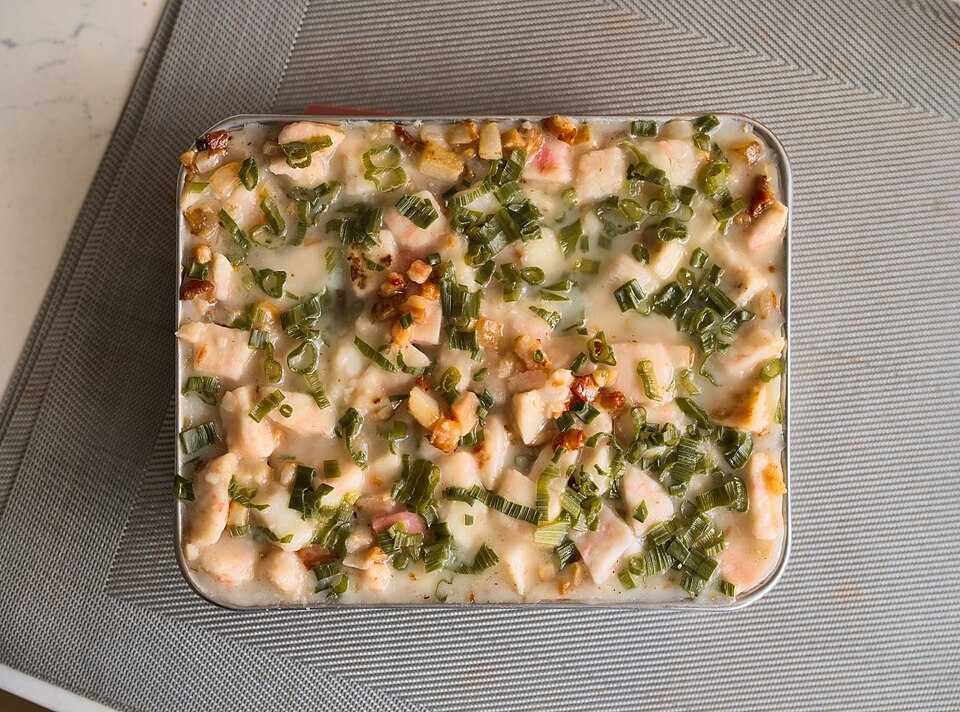 Photo: Dllu, CC BY-SA 4.0
Where it comes from
Chinese Wikipedia lists 芋粿 as a traditional snack in Taiwan, Chaoshan, Fuzhou and southern Fujian, made mainly as an offering for the Ghost Festival rites (中元普渡).
How it is made
For 芋粿, glutinous rice is ground into a milk and pressed dry, mixed with shredded taro and shallot oil, shaped into palm-sized cakes on banana leaves and steamed. Cantonese taro cake is often steamed in a deep pan, then sliced and pan-fried.
How to eat it
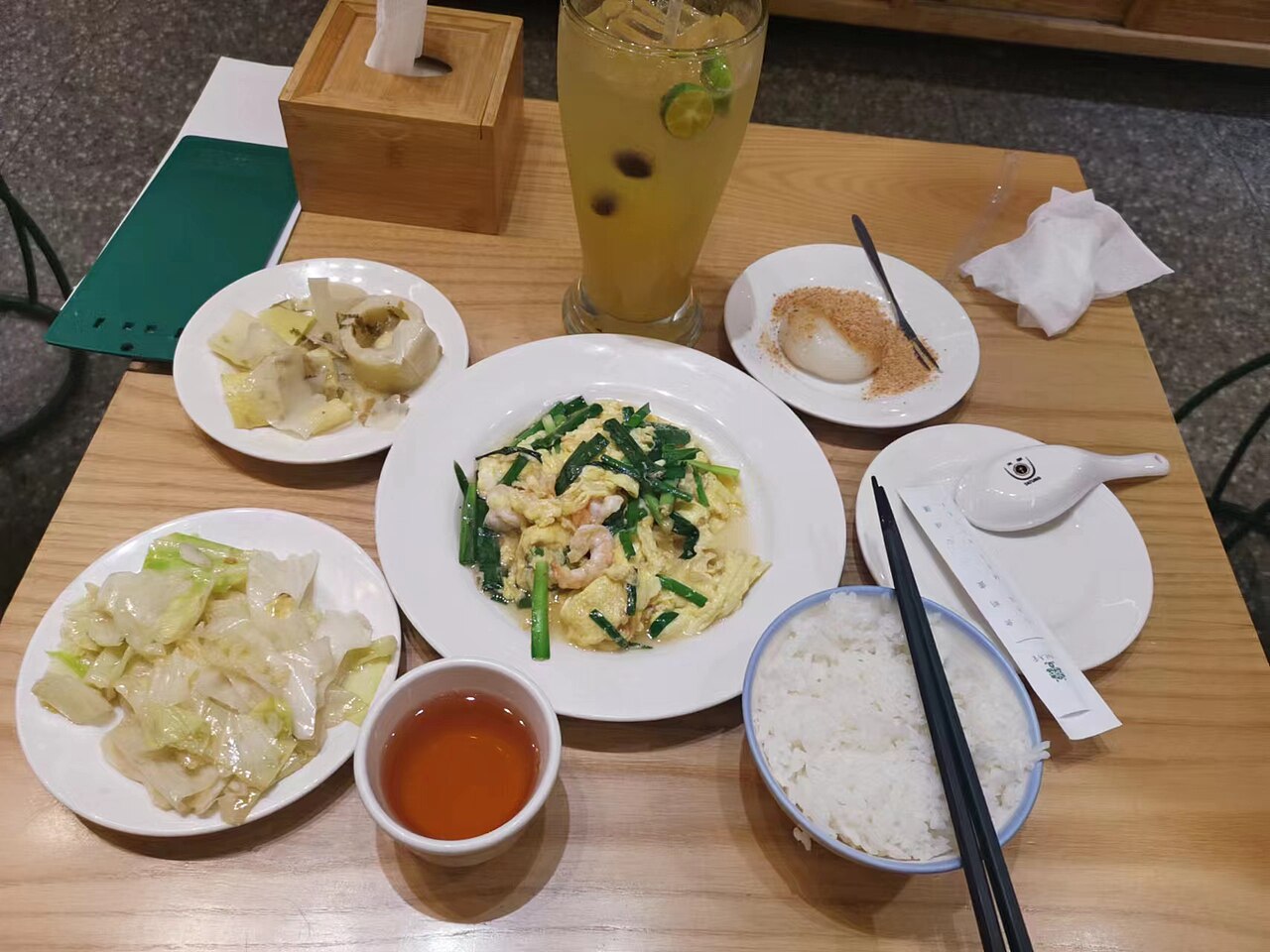
At Erge Shih Tang in Gushan you can take steamed taro cake with shiitake and dried shrimp as your starch instead of rice, next to the honey-braised saury.
In Kaohsiung
Erge Shih Tang lists its version as 寶島千絲芋香糕, a cake of shredded taro and sweet potato.
Where to eat it in Kaohsiung
Sources